


The Cases
That Inspired the Book
“Gangbusters:
The Brooklyn Strike Force Makes War on Crime”
- Nicholas Pileggi, New York Magazine

%20Henry%20%26%20Karen%20Hill%2C%20two%20unidentified%20couples%2C%20Jimmy%20%26%20Mickey%20Burke%2C%20T.jpg)
Use the Page menu to navigate the case content on this page.

The CHASING GOODFELLAS Cases
“Chasing Goodfellas” is former organized crime prosecutor Ed McDonald’s insider account of two of the most interesting and significant of the many headline-grabbing cases he prosecuted in his years with the Brooklyn Strike Force, the Lufthansa Heist and the Boston College point-shaving scandal.


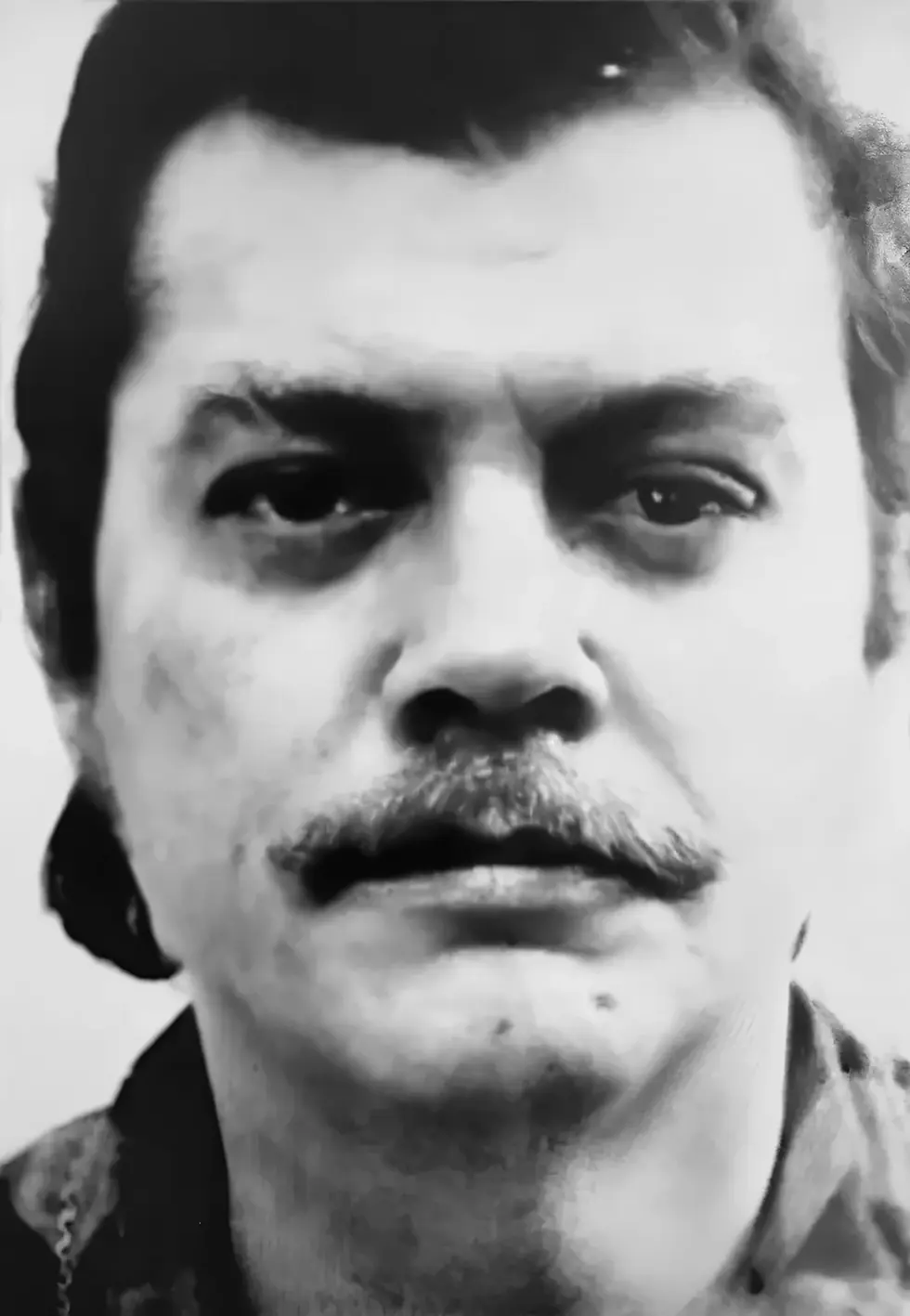
THE LUFTHANSA CARGO TERMINAL HEIST
The book begins with the dramatic account of how a group of gunmen organized by the unforgettable New York underworld legend, Jimmy “The Gent” Burke, planned and executed the robbery of over $6 million in cash and jewels from the Lufthansa cargo building at Kennedy Airport, at the time the nation’s largest heist. In the wake of the robbery, the murderous Burke carried out a campaign of terror, executing many of his accomplices to silence them and assume their share of the loot for himself.

The book moves on to the engrossing account of Ed’s assignment as the prosecutor in charge of the massive investigation of the robbery and the absorbing day-to-day efforts that led Ed and his FBI partners to a brick wall that prevented them from prosecuting Burke and his crew. Stymied by Burke, the investigators turned their sights on Lou Werner, the Lufthansa “inside man” who had supplied the thieves with critical information about the cargo building’s operations. Ed describes absorbing details of the step-by-step process that led to the turning of critical witnesses and the securing of evidence necessary for Werner’s indictment.
The resulting trial, described from Ed’s inside perspective, is riveting and at times uproariously funny. Ed describes his strategy at each stage of the trial and the interesting and often entertaining roles played by the witnesses, the judge, and the other participants in court. It was an unforgettable roller coaster ride of a drama.


THE BOSTON COLLEGE POINT-SHAVING SCANDAL/TRIAL
After the Werner trial, the action returns to the investigation of the elusive Burke crew. As Ed grows frustrated and is moving on to other things, he and his FBI partners are unexpectedly able to gain the cooperation of Henry Hill, Burke’s closest associate and an early insider on the Lufthansa robbery. Hill is a truly unforgettable character, despicable yet lovable, moronic but bright, endlessly funny with his self-deprecating sense of humor, and a font of information on the Burke crew and the entire Lucchese crime family. Hill’s uncorroborated account alone is unable to get the investigators over the finish line on a Lufthansa prosecution, but he almost inadvertently discloses that he and Burke had corrupted Boston College basketball players who had agreed to shave points. As coincidence would have it, Ed was a B.C. alum and had even played on the freshman basketball team. The ensuing investigation to back up Hill’s testimony about the fix is a gripping story, and Burke, a BC player named Rick Kuhn, and three low-level gangsters are indicted.

The point-shaving trial is one for the ages. Again told from Ed’s critical perspective, the story of the trial is extraordinarily entertaining, filled with a series of mad-cap events and high drama. Characters abound: witnesses, defense lawyers, the judge and others. It results in the conviction of Burke, Kuhn, and the three wannabes.
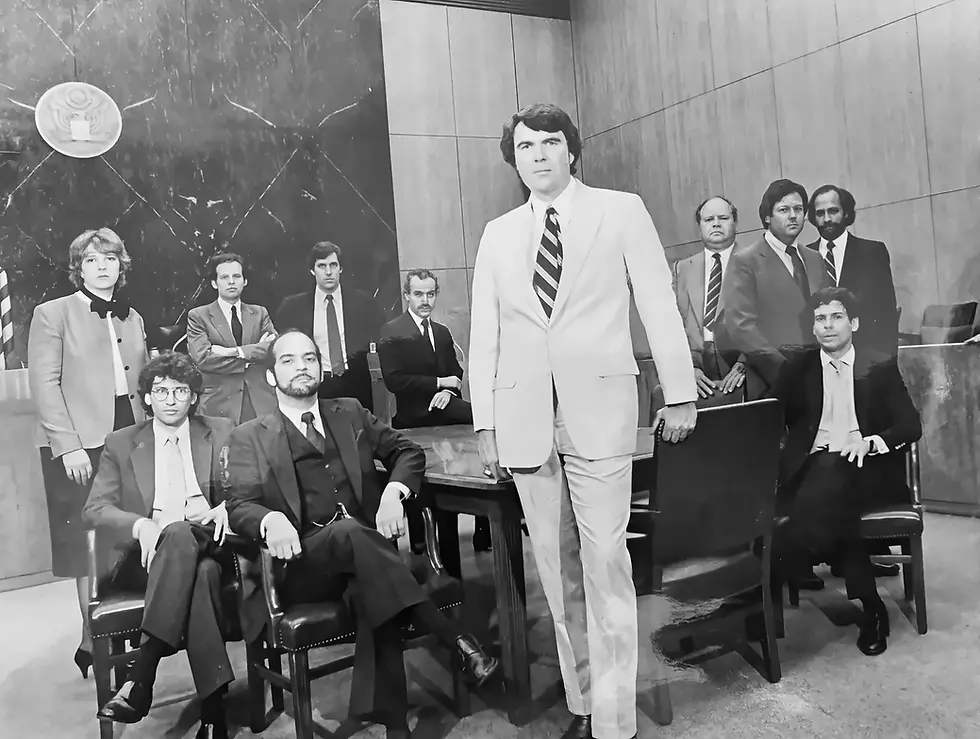
Background and Career as a Prosecutor
Read more about Ed's career.
Background
Ed began his legal career with a one-year clerkship for U.S. District Court Judge Anthony J. Travia at the federal courthouse in Brooklyn. He then served for five years as a prosecutor in the Manhattan District Attorney’s Office, working for the legendary District Attorneys Frank Hogan and Robert Morgenthau. In 1977, he was appointed as an Assistant Attorney in Charge of the Justice Department’s Organized Crime Strike Force in Brooklyn, the largest of the 14 strike forces through which the Justice Department carried out its program against organized crime and labor racketeering.
As deputy chief, he was responsible for the prosecutions featured in Chasing Goodfellas, the Lufthansa Heist and the Boston College point-shaving case. He was also part of the Strike Force team that supervised the FBI’s legendary Abscam undercover operation, the most comprehensive and successful public corruption investigation in the history of the Justice Department. It resulted in the convictions of New Jersey Senator Harrison Williams and six U.S. congressmen, four of whom were successfully tried by the Strike Force. Ed tried the Williams case with Strike Force chief Thomas Puccio.
As the Strike Force’s deputy chief, Ed also successfully tried Alphonse Persico, the Colombo Crime Family’s acting boss, on loansharking charges, and he obtained the convictions at two trials of two Sicilian heroin traffickers. He also participated in the investigations and prosecutions that resulted in the convictions of Colombo family boss Carmine Persico on bribery charges and Joseph Stabile, the first FBI agent ever to be indicted, on obstruction of justice charges.
After four and a half years as deputy chief, Ed was promoted at the age of 35 to be the Strike Force’s Attorney in Charge in May 1982. In his seven years in that position, Ed tried and convicted Bronx Congressman Mario Biaggi and Brooklyn Democratic boss Meade Esposito on corruption charges. He also personally oversaw the legal work that resulted in the electronic surveillance the FBI conducted at the home of the boss of the Gambino family, Paul Castellano.
During the 1980s, while Ed was running the Brooklyn Strike Force, the office obtained the convictions of two bosses of the Bonanno family (Philip Rastelli and Joseph Massino), four successive bosses of the Colombo family (Alphonse Persico, Carmine Persico, Gennaro Langella, and James Angelina); the underbosses of the Bonanno, Colombo, Gambino, and Lucchese families; the consigliere of the Gambino family; ten caporegimes of the Gambino family, four Colombo caporegimes, four Lucchese caporegimes, and two Genovese caporegimes; 17 Gambino family soldiers, 13 Colombo soldiers, nine Lucchese soldiers, two Bonanno soldiers, seven Genovese soldiers, and two soldiers in the New Jersey DeCavalcante family. During Ed’s tenure, the Strike Force also obtained the convictions of 17 officials in seven locals of the International Brotherhood of Teamsters, 16 officials in six locals of the Laborers International Union, three officials in the Bricklayers Union, four officials in the International Brotherhood of Carpenters, and 16 additional high-level labor union officials. In addition, the office obtained convictions of countless businessmen and others criminally associated with organized crime figures.
In July 1988, Ed received the Attorney General’s Award for Distinguished Service in recognition of his supervision of prosecutions that resulted in the convictions of the leadership of the Bonanno, Colombo, Gambino, and Lucchese families. The award is given annually at Main Justice in Washington, D.C., to recognize a handful of Justice Department employees for extraordinary contributions, exceptional performance, and significant achievements in the enforcement of the nation’s laws. In 1988, Ed was named by The Village Voice as a “Hero of New York” for his work in obtaining the convictions of Congressman Biaggi and Brooklyn Democratic boss Esposito. In 1986, he became an honorary member of the New York City Police Department’s Honor Legion.

Strike Force Projects
Significant Strike Force projects completed in the 1980s under Ed's leadership.
1. United States v. Philip Rastelli et al.
Bonanno Family Control of Teamsters Local 814
and the commercial, moving and storage industry.
In this 1986 prosecution, The Strike Force established that through its domination of Local 814, the union that represented over 3,500 workers in the commercial moving and storage industry, the Bonanno crime family corrupted the entire industry in the New York area and reaped millions in illegal profits over a period of almost 20 years. After a six-month trial, 16 defendants, including the three principal leaders of the Bonanno family, boss Philip Rastelli, underboss Joseph Massino, and consigliere Nicholas Marangello, the entire leadership of Local 814, and several businessmen were convicted on RICO and related charges. Among other things, the case involved a bid-rigging scheme in which operators of four major moving companies, protected by Bonanno family muscle, monopolized millions of dollars in federal, state and local government moving contracts for several years. The case also involved the corrupt manipulation of Local 814 pension and welfare funds, countless instances of extortionate payoffs, mail fraud, and arson. The criminal convictions were followed in 1987 by a civil RICO suit that resulted in the removal of Local 814’s leadership and the appointment of a trustee to run the union.
2. KENRAC: the Kennedy Airport Labor Racketeering Project –
Lucchese Family Control of Teamster Locals 295 and 851
For almost ten years, the Strike Force coordinated an investigation of organized crime and labor racketeering in the multi-billion dollar air freight and trucking industries at JFK Airport. Organized crime figures and labor racketeers, in the two Teamster locals representing industry employees, often acting in collusion with unscrupulous businessmen, conducted a variety of sophisticated schemes through which they earned millions of dollars in illicit profits. Over 30 organized crime figures, businessmen, and labor union officials were convicted. In 1986, the investigation culminated in the successful prosecution of 11 defendants, including capos Paul Vario and Frank Manzo and other leaders of the Lucchese crime family; the leaders of two Teamster locals; and several businessmen. Among other things, the case involved several complex extortion schemes, illegal insider trading by members of the Lucchese family in the stock of a publicly held air freight company, and a scheme by which members of the Lucchese family laundered hundreds of thousands of dollars through bankers and bond brokers.
3. The Gambino Family Project
Throughout the 1980s, the Strike Force coordinated a project aimed at the ever-changing hierarchy of the Gambino crime family, the nation's largest and most significant organized crime group.
The project was primarily based on months of electronic surveillance conducted at the Staten Island homes of family boss Paul Castellano and his underboss, Neil DellaCroce, and other locations used by upper echelon members of the family. In the midst of the investigation, DellaCroce died from cancer and Castellano was assassinated by his successor, John Gotti. The project culminated in a series of prosecutions in which the Strike Force convicted 13 leaders of the Gambino family, including the second and third ranking members, Joseph Armone and Joseph N. Gallo, and over 22 additional significant members and associates. Among the crimes for which the defendants were convicted were a labor racketeering scheme in which Castellano split with the leader of the New York Steamfitters Union labor peace money paid in connection with the construction of a deepwater pipeline facility for Mobil Oil, the extortion of hundreds of thousands of dollars from one of the city's largest color processing laboratories, a wide ranging bribery scheme that sought preferential treatment in early release for imprisoned Mafia leaders, and the corrupting of a deputy clerk in the federal courthouse in Manhattan in order to obtain confidential information. Thereafter, the Strike Force supervised months of electronic surveillance of boss John Gotti that ultimately resulted in his conviction on RICO and murder charges.
4. The Colombo Family Project
During the 1980s, the Strike Force successfully prosecuted the four successive bosses of the Colombo family. In 1980, Alphonse Persico was convicted on charges involving extortionate credit transactions. The case was a result of an extensive two-year undercover project that Ed supervised. In 1981, Alphonse’s successor, his brother Carmine, pleaded guilty to bribery in a case in which he offered $250,000 to the Strike Force's IRS representative who was posing as being corrupt. In 1986, the Strike Force convicted Gennaro Langella, who filled the family's leadership vacuum when the Persicos were removed from New York, for perjury in grand jury proceedings Ed conducted. Finally, in 1987, the Strike Force convicted James Angellina, Langella’s successor, for receiving stolen property. Upon his release from prison in 1988, he was murdered.
In 1986, 23 members and associates of the Colombo crime family, including three sons of the late family boss, Joseph Colombo, pleaded guilty to RICO and other charges in a 71-count racketeering indictment, charging that the defendants had conducted a RICO enterprise through an extensive pattern of racketeering activity that included murder, attempted murder, extortion, narcotics trafficking, numerous home robberies, and mail and wire fraud. The group's activities demonstrated that while the Mafia families in New York were engaging extensively in business crimes and labor racketeering, they had not abandoned traditional, less sophisticated money-making activities.
5. The Oil and Gas Project
Throughout the 1980s, the Strike Force coordinated efforts of several federal and local agencies investigating organized crime's corrupt involvement in the independent fuel oil industry in the New York area. The investigation, which focused primarily on Long Island, revealed that large numbers of corrupt wholesalers and retailers of motor fuel aligned with and “fronting” for both traditional La Cosa Nostra families and Russian émigré organized crime figures, evaded the payment of billions of dollars in federal, state, and local taxes. These evasions were accomplished through an extraordinarily complex variety of schemes employing shell corporations, reams of fraudulent paperwork, domestic and foreign banks, and corrupt businessmen. During Ed's tenure, over 40 businessmen and organized crime figures were successfully prosecuted on RICO, tax, mail and wire fraud, and state charges. Judgments of restitution and forfeiture exceeding $100 million were also obtained in the federal and state courts.
6. United States v. Michael Franzese, et al.
The 1986-1987 prosecution of Colombo family captain Michael Franzese and several of his associates, including two labor union presidents, was the culmination of a four-year project in which the Strike Force led a team of eight prosecutive and investigative agencies. The case represented one of the Justice Department's most ambitious efforts to root out organized crime's involvement in legitimate business. Franzese, one of the youngest leaders and probably the largest individual moneymaker for organized crime in the country, and his associates were charged with conducting a multifaceted racketeering enterprise that earned millions in illegal income through the operation of the nation's largest union representing security guards and 18 companies that Franzese owned or controlled. The companies were involved in motion picture production, the wholesale distribution of gasoline, automobile dealerships, trucking, construction, and real estate ventures. The group's activities defrauded some of the country's most respected businesses of millions of dollars. Victims included General Motors, Citicorp, Chemical Bank, the Chubb Insurance Group, Beneficial Finance, Mobil Oil and Mazda Motors. All the defendants were convicted on racketeering charges.
7. The First United Fund Case
In June 1987, the Strike Force filed a 145-count RICO indictment against Mario Renda, the president of First United Fund, a $6.5 billion a year money brokerage, and Martin Schwimmer, a prominent investment adviser. It was the largest labor union pension fraud case ever to be indicted. The two defendants were charged with brokering the investment of more than $100 million from the benefit plans of Sheetmetal Workers Local 38 and Teamsters Local 810 in long-term certificates of deposit issued by 18 small banks and savings and loan associations throughout the country. Renda and Schwimmer were convicted for diverting for themselves and their corrupt accomplices more than $14 million in commission payments.
8. CONRAX: The Long Island Construction Industry Project
During the 1980s, the Strike Force successfully prosecuted over 150 labor union officials, businessmen, organized crime figures, and others for crimes committed in connection with the construction industry in New York. These crimes included violations of the RICO statute, bid rigging, extortion, labor racketeering, and wide-scale tax-fraud.
In December 1988, as a result of a project codenamed Conrax, the Strike Force convicted after a three-month trial and several guilty pleas, ten significant construction union officials and ten major contractors on charges involving the RICO statute, labor racketeering, mail and wire fraud, and the improper manipulation of labor union pension and welfare programs. The prosecution reflected the longtime domination by a group of labor racketeers in several Mason Tenders and other labor locals and organized crime figures over large segments of the construction industry in Queens, New York.
Private Practice
In June 1989, Ed resigned as Strike Force chief after almost 18 years of public service. He joined Reboul MacMurray, a New York firm with approximately 70 lawyers. In 2003, he became a partner in Dechert LLP, a large international firm, where he continues to practice as a Senior Counsel. His practice focuses on white-collar criminal defense, securities enforcement matters, and complex civil litigation. He also conducts internal investigations for businesses and labor unions. He has been consistently recognized by Super Lawyers, New York Magazine, Benchmark Litigation, and other attorney reference guides as one of the best lawyers in his areas of practice. The Legal 500 US has said, “The ‘excellent’ Edward McDonald lives up to his reputation as ‘one of the best criminal defense attorneys in New York.’”
His clients have included mutual fund companies, hedge fund managers, domestic and foreign banks and bank officials, other international financial institutions and their employees, accounting firms, health care providers, insurance companies, real estate development and management firms, construction and design firms, labor unions and their officers, public officials throughout the New York area, attorneys, and physicians. He represented one of the world's most prominent recording artists and the New York Policemen's Benevolent Association. He has represented a large South African business conglomerate, one of the world's largest airlines, the former chairman and deputy chairman of the Russian Securities Commission, a member of the Saudi royal family, Lebanese and Saudi businessmen, and many other businesses throughout the world.
He has extensive experience in matters concerning alleged violations of securities, tax, money laundering, antitrust, customs, immigration, bankruptcy, public corruption, environmental, and RICO statutes. In addition to trying countless cases in federal and state trial courts and arguing almost 70 appeals in the U.S. Court of Appeals for the Second Circuit, the New York Court of Appeals and the Appellate Division, First Department, Ed has represented numerous clients before the SEC, FINRA, the Federal Reserve Board, the EEOC, and other federal, state, and local agencies.
Ed's practice has taken him to 28 states and Canada, Mexico, England, France, Germany, Norway, Austria, Hungary, Romania, the Czech Republic, Egypt, Saudi Arabia, South Africa and Japan.